2nd Singapore Green Dialogue – “Sustainability in a Fragmented World”
The Singapore Institute of International Affairs (SIIA) convened the 2nd Singapore Green Dialogue (SGD) on 11 February 2026, bringing together over 100 policymakers, business leaders, investors, and experts to examine how sustainability strategies must adapt amid growing global fragmentation.
In a keynote dialogue, Dr. Janil Puthucheary, Senior Minister of State, Ministry of Sustainability and the Environment & Ministry of Education, shared Singapore’s perspectives on international climate actions, the efforts of Singapore and ASEAN, as well as the role of the private sector in addressing climate change.
“Notwithstanding the more challenging geopolitical environment, Singapore remains committed to staying the course in our efforts to address climate change. But we need to be prepared, particularly if global mitigation falls short. We have already started on our climate adaptation efforts – protecting our coasts, improving our resilience for water and food, and diversifying our sources of imports. We are developing Singapore’s inaugural National Adaptation Plan, which will chart out Singapore’s long-term strategy to build resilience and adapt to the impacts of climate change,” SMS Janil said.
Speaking during a keynote dialogue on “ASEAN – Asia Climate Cooperation – Regional Leadership, Global Impact”, Dr. Bambang Brodjonegoro, Dean and CEO of the Asian Development Bank Institute (ADBI), underscored that ASEAN, while highly vulnerable to climate impacts, also has an opportunity to shape pragmatic pathways for sustainable development.
“The critical question for ASEAN is not whether to engage with sustainability standards, but how to do so in a way that preserves competitiveness and supports development in a fragmented global environment,” Dr. Brodjonegoro said. “One key priority is regulatory interoperability by strengthening regional alignment and common frameworks.”
Dr. Brodjonegoro cited examples of regional integration such as the ASEAN Taxonomy for Sustainable Finance, and how the ADB, World Bank, and ASEAN have established the ASEAN Power Grid Financing (APGF) Initiative to mobilise large-scale funding for grid linkages in the coming decades.
Across two panels, “The Cost of Compliance – Sustainability versus Competitiveness” and “ASEAN’s Climate Momentum – Progress, Gaps, Opportunities”, speakers noted the need for stronger regional leadership amid pushback against ESG in other countries. They discussed diverging international standards and the nascent, but growing, collaboration and harmonisation across jurisdictions. Speakers also highlighted the economic value of sustainability efforts, noting the opportunity to advance them in practical and pragmatic ways that can serve as an engine of growth for people and livelihoods.
The Dialogue underscored the importance of regional cooperation, private sector leadership, and policy clarity and coherence in advancing climate action, even as global climate governance becomes more fragmented.
“At a time of economic anxiety and geopolitical strain, some voices are questioning climate action and dismissing renewable energy. But the experience in this room tells a different story: being green is not a ‘scam’. It is an investment in stability, competitiveness, and long-term prosperity. Walking away from green ambition does not make a country strong; strength lies in the capacity to adapt, innovate, and lead. ASEAN and Asia may not set every global rule, but we can shape outcomes through cooperation, pragmatism, and sustained commitment,” said SIIA Chairman Mr. Simon Tay in his closing remarks.
About the Singapore Green Dialogue (SGD)
The SGD is the SIIA’s flagship event where regional policymakers and business decision-makers come together to discuss key sustainability matters within the region. Read more about the inaugural Singapore Green Dialogue held on 22 October 2024 at https://siiaonline.org/conference-highlights-singapore-green-dialogue-sgd
About SIIA’s Sustainability Programme
Our Sustainability Programme began in 1997 when we organised Singapore’s first haze dialogue with the Singapore Environment Council on the critical haze problem. The programme has evolved to address a broader range of sustainability issues, including agribusiness and forestry supply chains as well as the leveraging of green finance to advance ASEAN’s climate action and carbon neutrality goals.
About the Singapore Institute of International Affairs (SIIA)
Insights • Networks • Access
Established in 1962, the Singapore Institute of International Affairs (SIIA) is a non-profit and independent think tank committed to producing policy analysis, fostering in-depth dialogues and bridging gaps between policymakers, private sector decision-makers and experts to shape public policy and social responses. Centred around ASEAN focused themes, the institute aims to deliver policy analysis in international affairs and on issues driving environmental sustainability.
As a founding member of the ASEAN-ISIS (ASEAN Institutes of Strategic and International Studies) network since 1988, we engage in “Track II” diplomacy, fostering dialogue among stakeholders in our region and beyond.
SIlA has been consistently ranked as one of the leading think tanks in Southeast Asia and the Pacific, in the Global Go To Think Tank Index by the University of Pennsylvania. Since 2017, SIlA was ranked the No. 1 independent think tank in Asia. It was also recognised as one of the top 50 think tanks globally, excluding the United States of America. For two consecutive years since 2019, it was recognised as the No. 1 think tank in South Asia, Southeast Asia, and the Pacific (excluding India). In 2020, SIIA was also recognised as one of the think tanks with the best policy and institutional response to the COVID-19 pandemic.
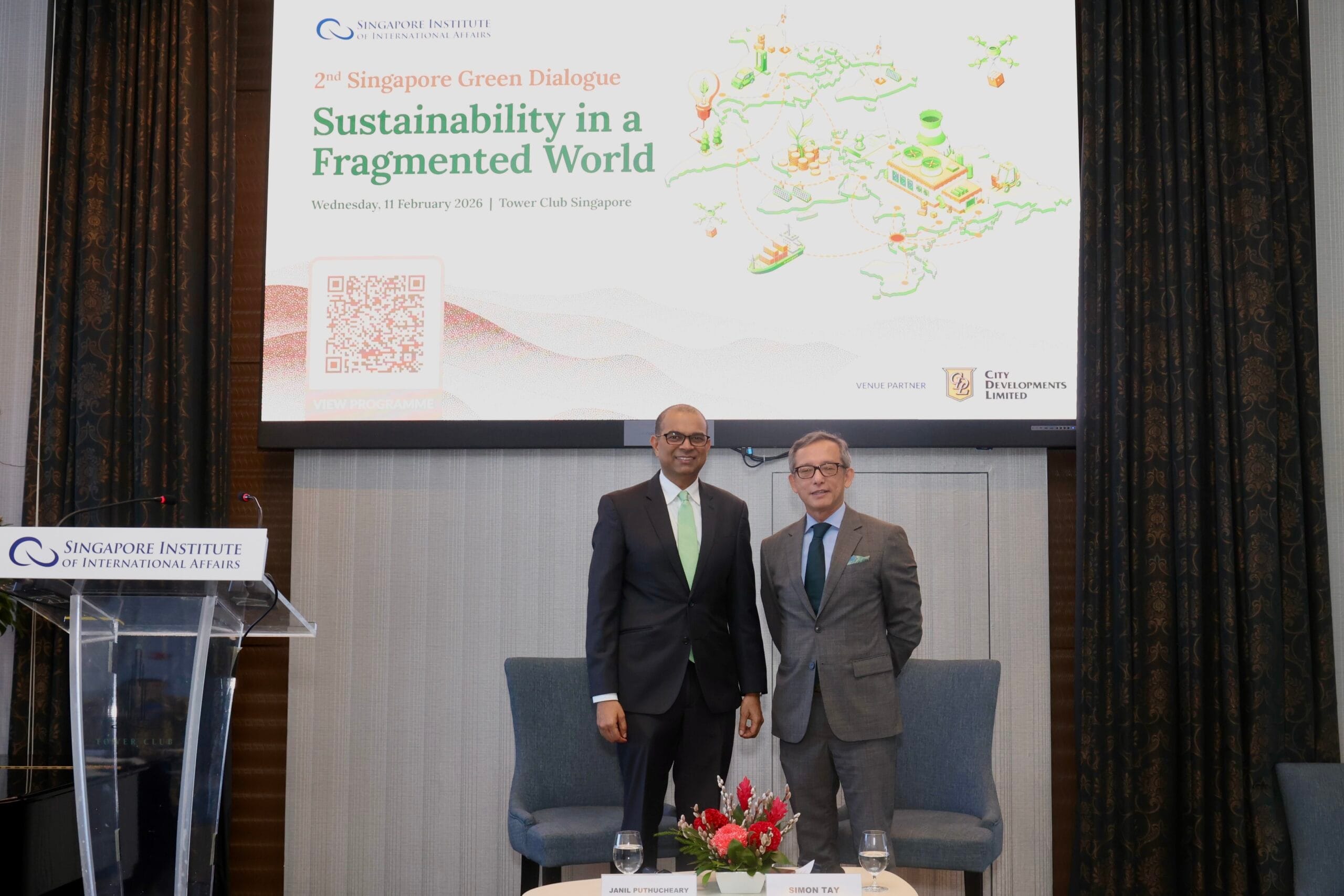
Senior Minister of State for Sustainability and the Environment Janil Puthucheary (left) with Singapore Institute of International Affairs chairman Simon Tay at the 2nd Singapore Green Dialogue on Feb 11. (Photo: SIIA)
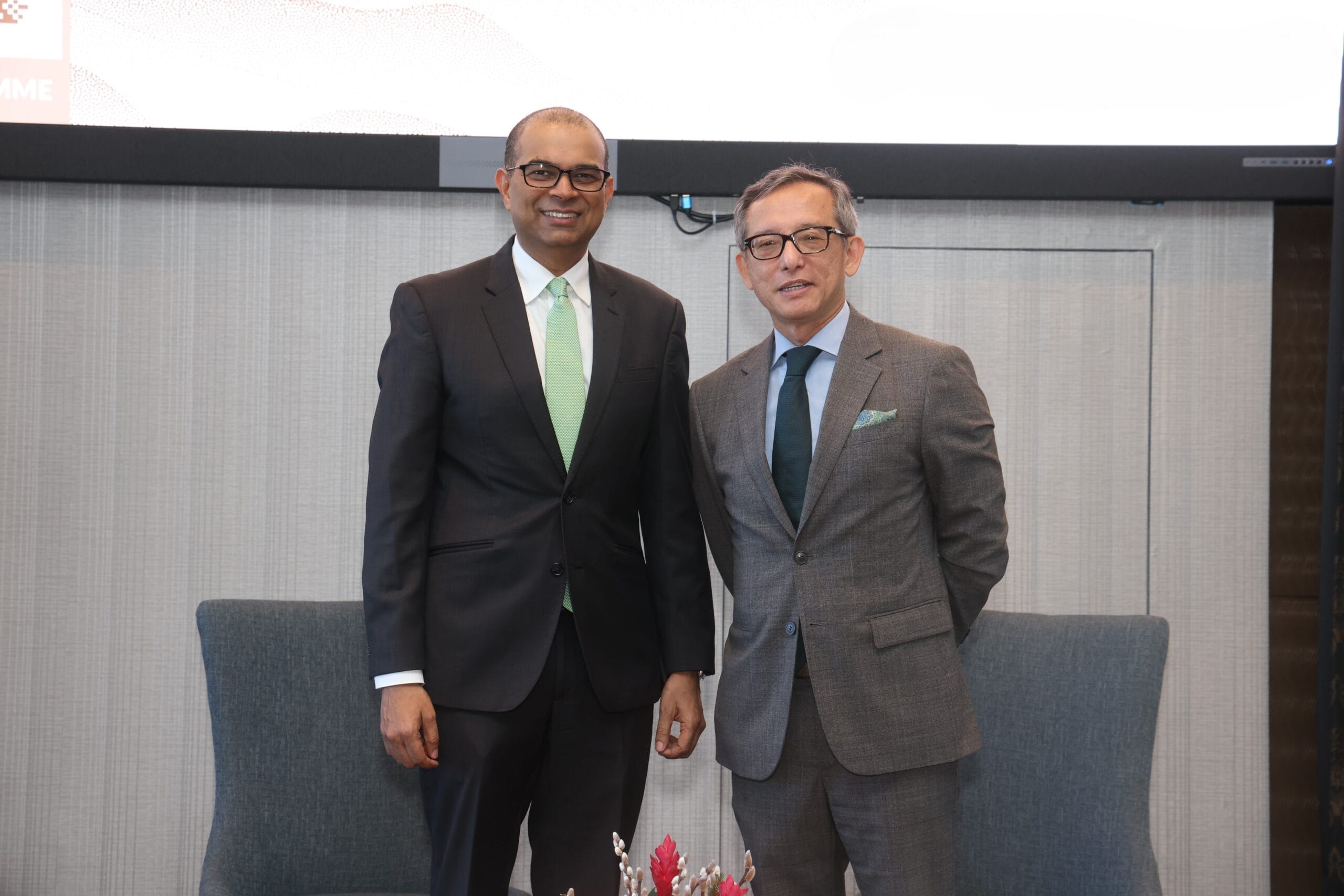
Senior Minister of State for Sustainability and the Environment Janil Puthucheary (left) with Singapore Institute of International Affairs chairman Simon Tay at the 2nd Singapore Green Dialogue on Feb 11. (Photo: SIIA)
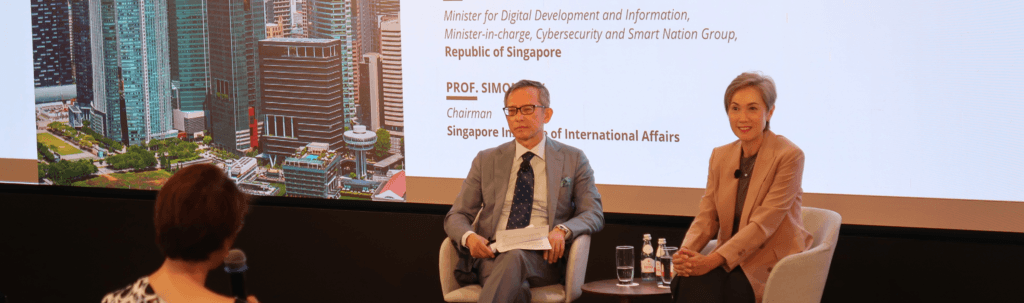
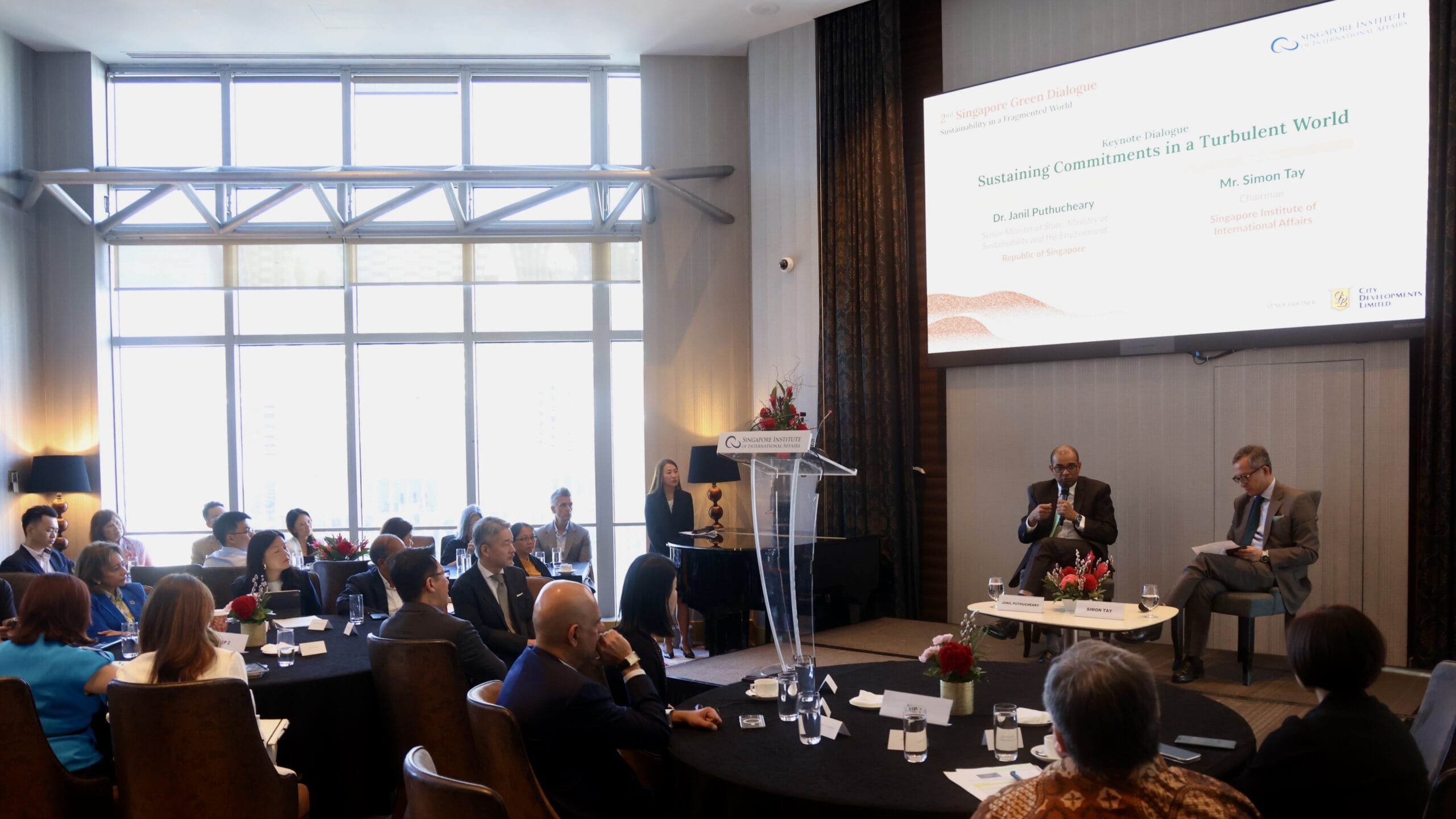 Senior Minister of State for Sustainability and the Environment Janil Puthucheary (left) in a dialogue with Singapore Institute of International Affairs chairman Simon Tay at the 2nd Singapore Green Dialogue on Feb 11. (Photo: SIIA)
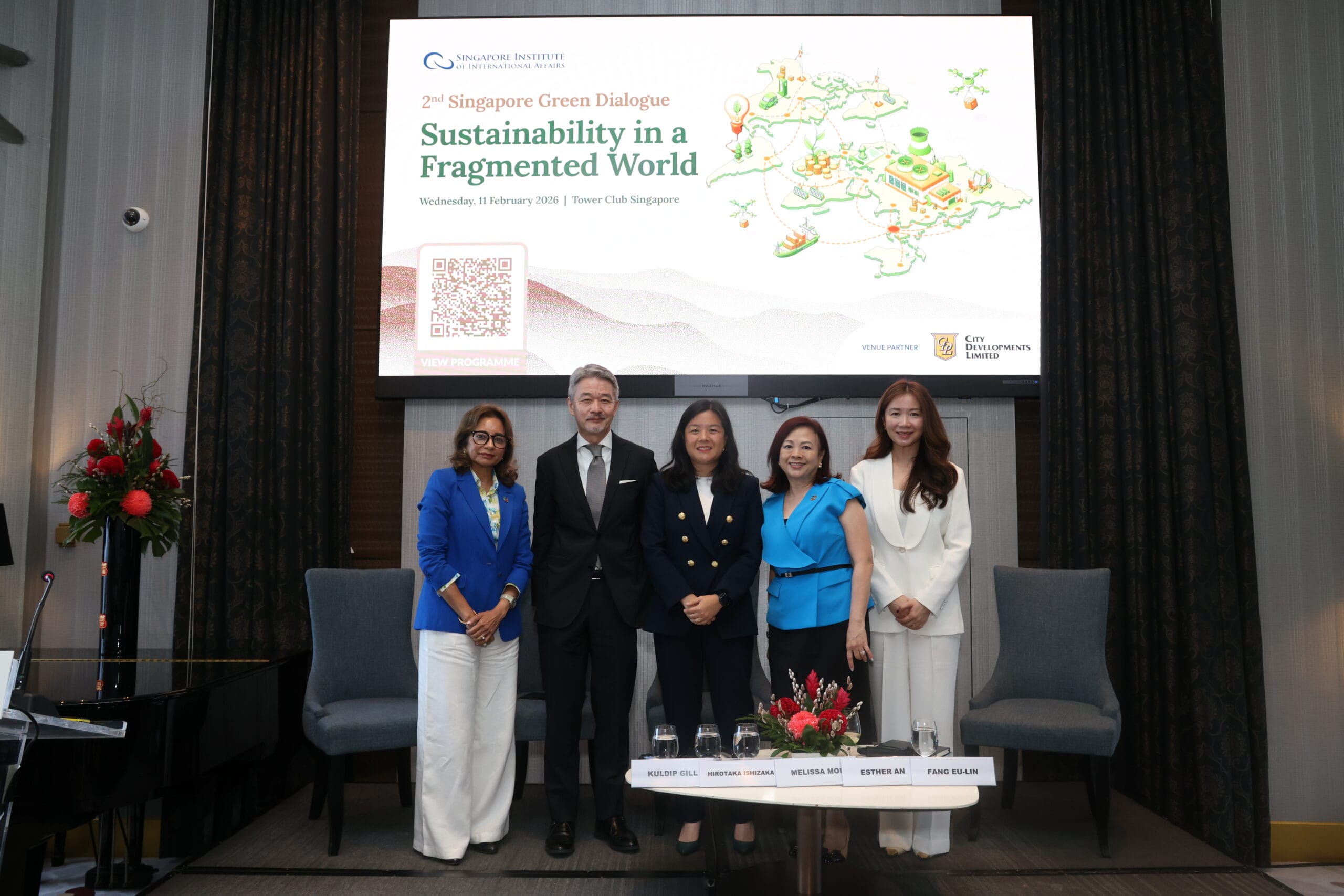
Panel 1: “The Cost of Compliance – Sustainability versus Competitiveness?”
From left to right:
Ms. Kuldip Gill, Assistant Chief Executive (Accounting Development & Regulatory Group), Accounting and Corporate Regulatory Authority (ACRA)
Mr. Hirotaka Ishizaka, Chief Sustainability Officer, Mitsubishi Corporation Singapore Branch
Ms. Melissa Moi, Head of Sustainable Business, UOB
Ms. Esther An, Chief Sustainability Officer, City Developments Limited (CDL)
(Moderator) Ms. Fang Eu-Lin, Partner and Sustainability & Climate Change Practice Head, Asia Pacific Co-leader for Sustainability at PwC, and SIIA Council Member
(Photo: SIIA)
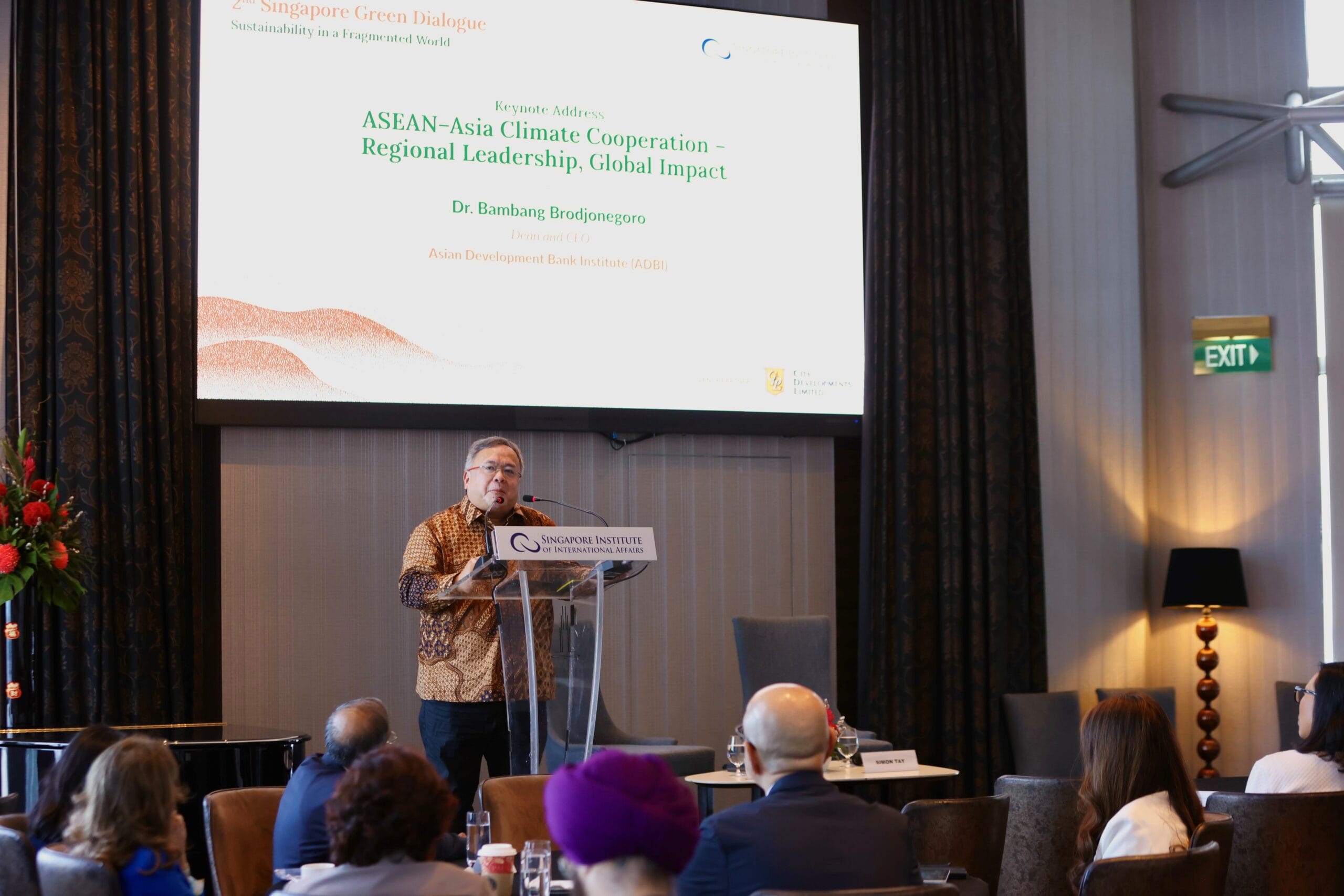
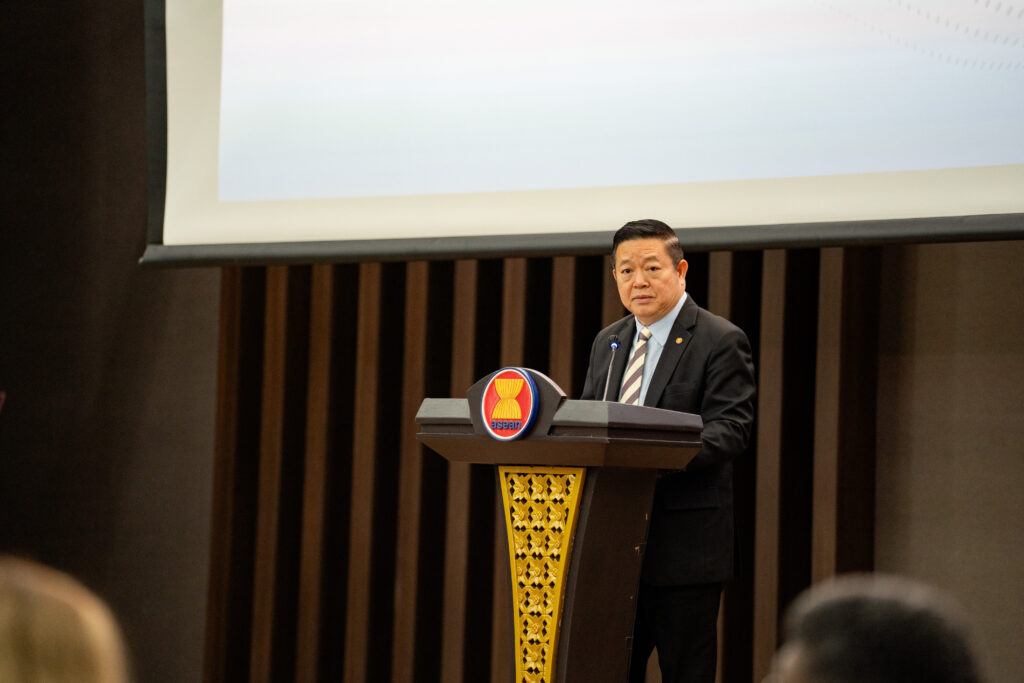
Dr. Bambang Brodjonegoro, Dean and CEO, Asian Development Bank Institute (ADBI), giving his keynote address at the 2nd Singapore Green Dialogue on Feb 11. (Photo: SIIA)
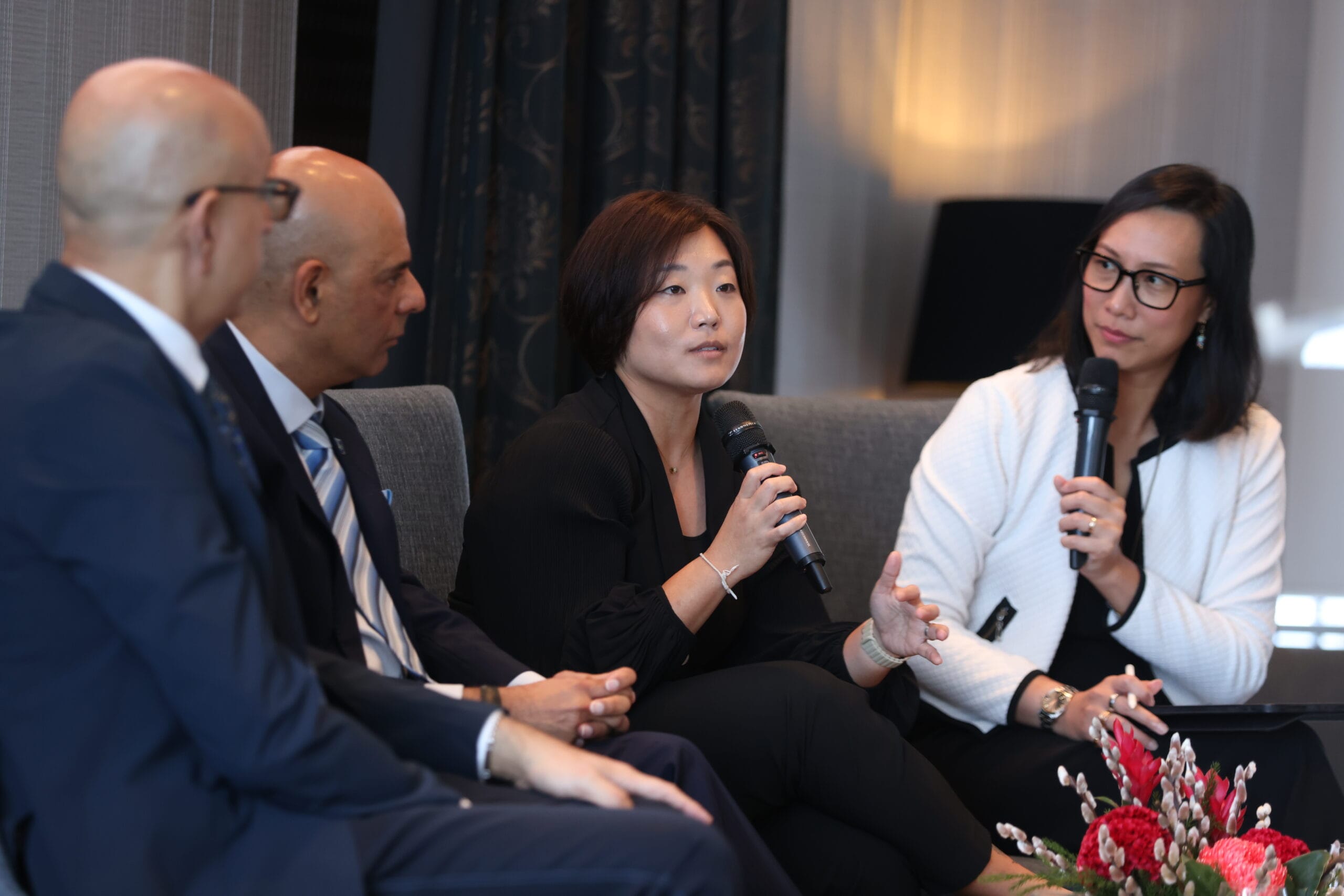
Panel 2: “ASEAN’s Climate Momentum – Progress, Gaps, Opportunities”
From left to right:
H.E. Satvinder Singh, Deputy Secretary-General for ASEAN Economic Community, ASEAN
Mr. Jackie Surtani, Regional Director and Head of Singapore Office, Asian Development Bank (ADB)
Ms. Helena Ooi, Head of Strategy, Sustainability, Digital and Data, Maybank
(Moderator) Ms. Cheryl Chen, President, S&P Global Foundation, and SIIA Council Member
(Photo: SIIA)
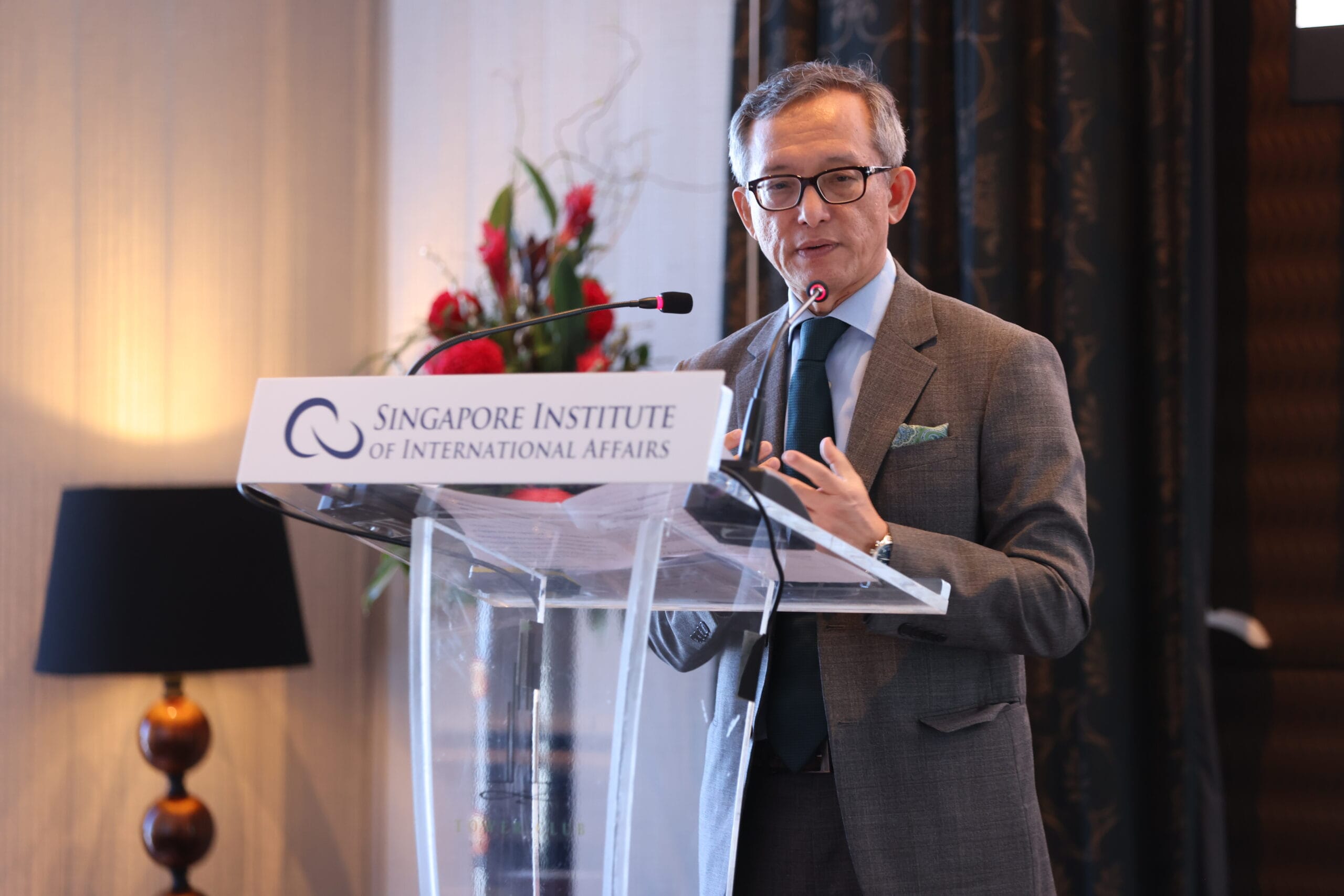 Singapore Institute of International Affairs chairman Simon Tay speaking at the 2nd Singapore Green Dialogue on Feb 11. (Photo: SIIA)
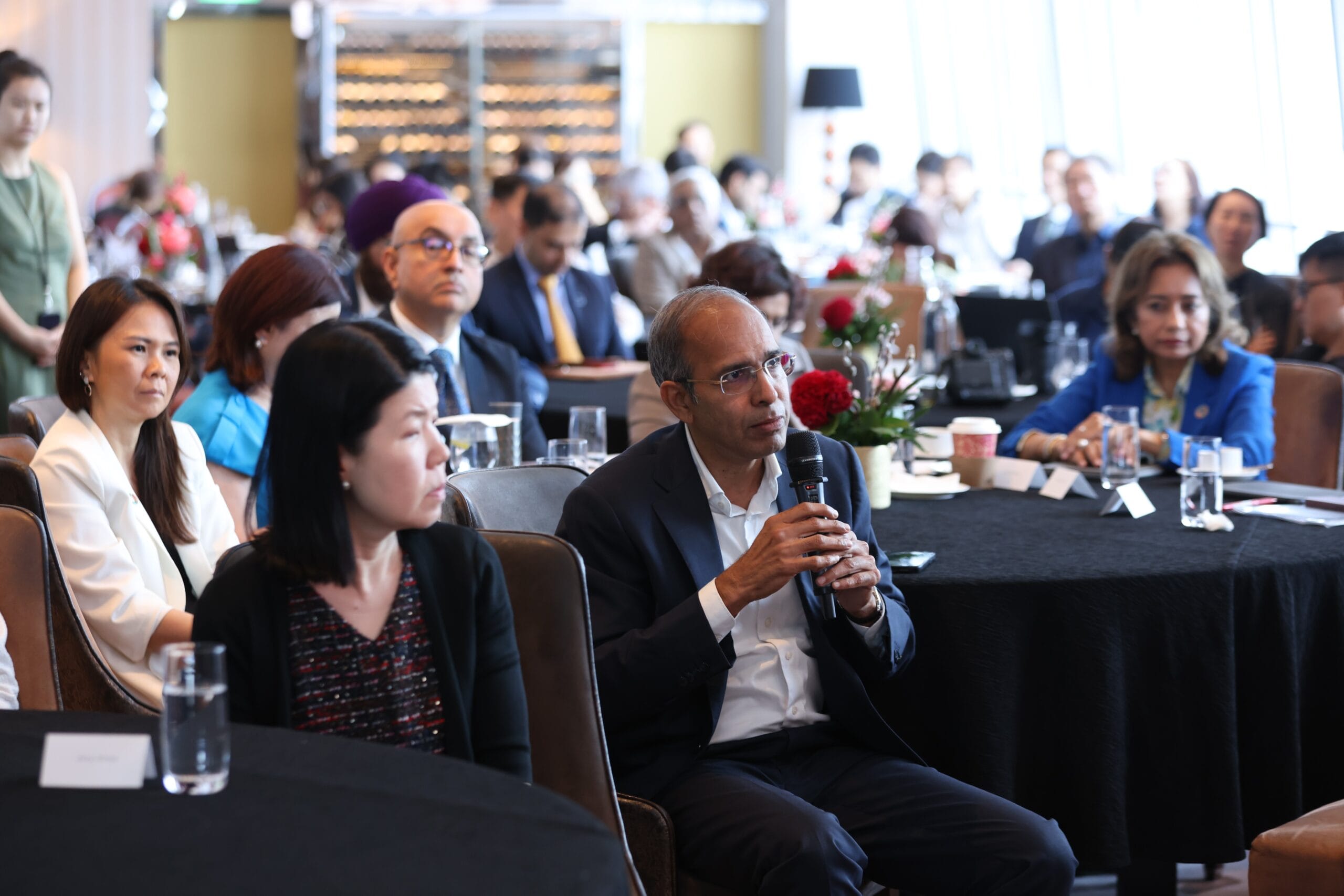
Member of the audience Mr Satyanarayan Ramamurthy during Q&A at the 2nd Singapore Green Dialogue on Feb 11. (Photo: SIIA)