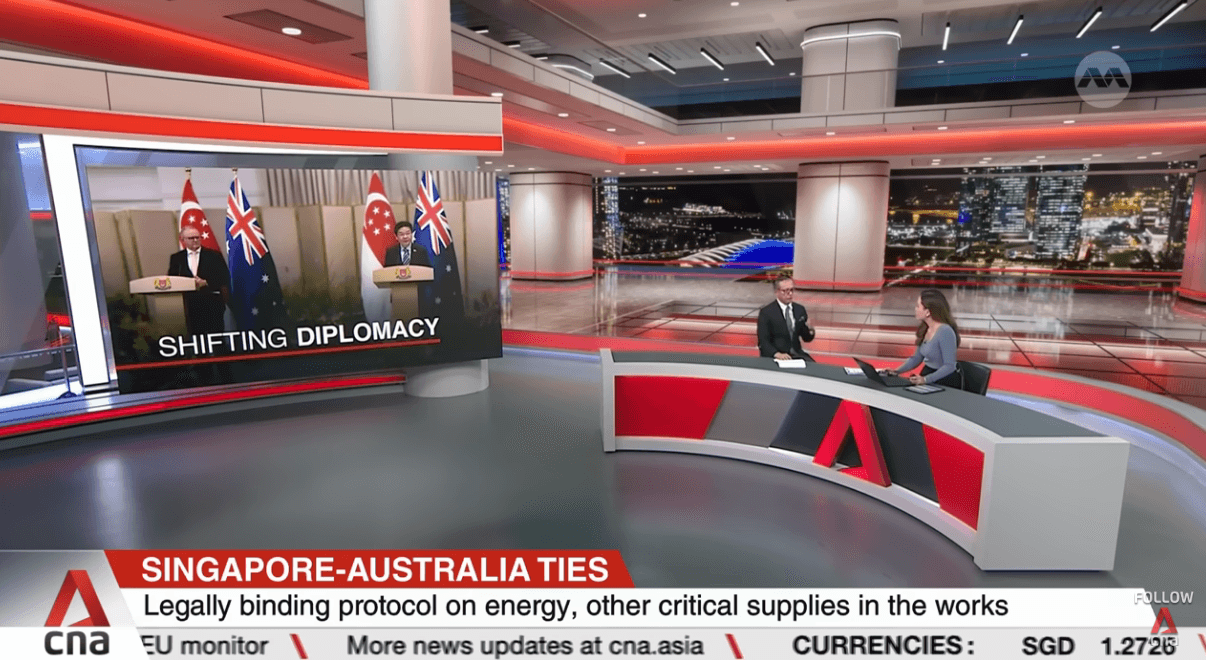
SIIA Chairman Simon Tay spoke with CNA’s Angela Lim on Singapore Tonight on 10 April 2026 about Australian Prime Minister Anthony Albanese’s visit to Singapore, discussing the strategic implications for energy security, economic resilience, and Singapore–Australia cooperation in an increasingly uncertain global environment.
Here are some highlights from the interview:
What does Prime Minister Albanese’s visit tell us about how Singapore and Australia see each other’s role in an increasingly uncertain global environment?
“The most immediate point is about energy. There are critical questions after what’s happened in the Iran war.
The second is a follow-up on the bilateral relationship between Singapore and Australia — an already strong relationship that has been elevated through a strategic partnership, with a declaration to go further not just on energy, but also on the green economy, food, and other areas.
The third, is the global context. We are going through very turbulent times, as both leaders have said, and partnerships, friendships, and critical resources are very important to reinforce and to provide reassurance, not just to leaders, but to the people in both societies.”
How has energy moved from being an economic issue to now being a very strategic one between the two nations?
“With the near closure of the Strait of Hormuz, as our Foreign Minister Vivian Balakrishnan has said, this is a choke point for Asia, because a lot of that oil and gas goes to China, Korea, and our part of the world, and Australia is part of this region. Australia exports certain types of energy but is reliant on other types.
The instinct of countries, when they face potential price shocks, is to clamp down and hold back, and that’s why I think the two leaders have placed a very important emphasis on remaining open and following rules. Neither side should walk away from contracts the private sector has signed.”
Both leaders have also agreed that resilience is especially important at this time. How is diplomacy changing, given these overlapping, or, as some analysts call them, polycrises?
“That’s where Prime Minister Lawrence Wong’s reference to the pandemic is very important. During the pandemic, many countries did hold back and things broke down. Supply chains broke down. This is not quite the same, but we’re facing shortages, and the instinct has remained.
The polycrisis, whether it’s climate, the current war, or other disruptions that could happen near us or further afield, really reinforces the need to have open ties with many partners, but particularly strong ties with some. And I want to re-emphasise that this is not, for Singapore, just a question about energy; it’s about food. Our island doesn’t have enough food, and we’ve seen in the past that certain food sources can get cut off.”
What does this visit show about how middle powers like Singapore and Australia manage global risks, especially when major power rivalry continues to intensify?
“This is another worldview that Australia and Singapore really share in common. We are both friends of America. Australia, in particular, is a formal military ally, and we are both economically engaged with and cooperate with China, even as we recognise the tensions between the two. So I describe this as Minus-Two world. How do we go on dealing with each other when the two major powers do not want to deal with each other?
It is therefore very important to see that, unlike, say, Canadian Prime Minister Carney’s view that we can run the world, what the two leaders are saying is that we can reassure each other. We can show that our relationship makes sense to both of us, that we continue to uphold certain standards, and that we can pathfind.
So in the midst of all this, Singapore has signed a green shipping corridor with Australia. As we strengthen supply chains, we are also trying to green them because, in a polycrisis, climate is never far from anyone’s mind.”
With the growing emphasis on trusted partnerships over formal alliances, do you see a shift in their importance?
“Very much. There are going to be limits to alliances, but we need to go beyond pieces of paper. When you see Prime Minister Albanese and our Prime Minister Lawrence Wong, you know they’ve met before, they’ve looked each other in the eye, and there is a certain amount of trust. It’s not just a paper agreement. And what we’re talking about here is not just a declaration. There has been a commitment to further implementation, with details to be worked out among officials. That is the important step: beyond high-level talk, real, practical cooperation happens.
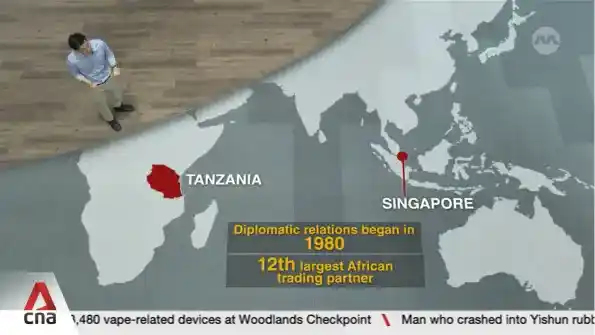
I’m also delighted to reassure Singaporeans that, besides Australia, an important partner, we have seen PM Wong step up ties with India and South Korea, and there have been pledges to expand engagement with Mexico and even Addis Ababa. So really, the effort by PM Wong after last year’s election is to ensure that Singapore remains plugged into the world on positive terms.”
Do you think this could be the start of broader energy coalitions in the region, and do you see Singapore as well positioned to spearhead or lead them?
“A lot depends on how many countries can come to the same thinking. We supply refined oil and diesel to Australia, which they need, and they supply LNG to us. So bilaterally, the calculation is more straightforward: you need something I have, and I need something you have. When you multiply that across more parties, it becomes a more difficult and complex trade-off.
If arrangements become too large, countries like the United States or China may ask: what are you doing, and are you ganging up against one of us? So for now, we are seeing a degree of bilateralism, and that is useful, and we may see more such bilateral ties with other countries going forward.”
Watch the interview here: https://www.youtube.com/watch?v=nW_FZuB3CVs