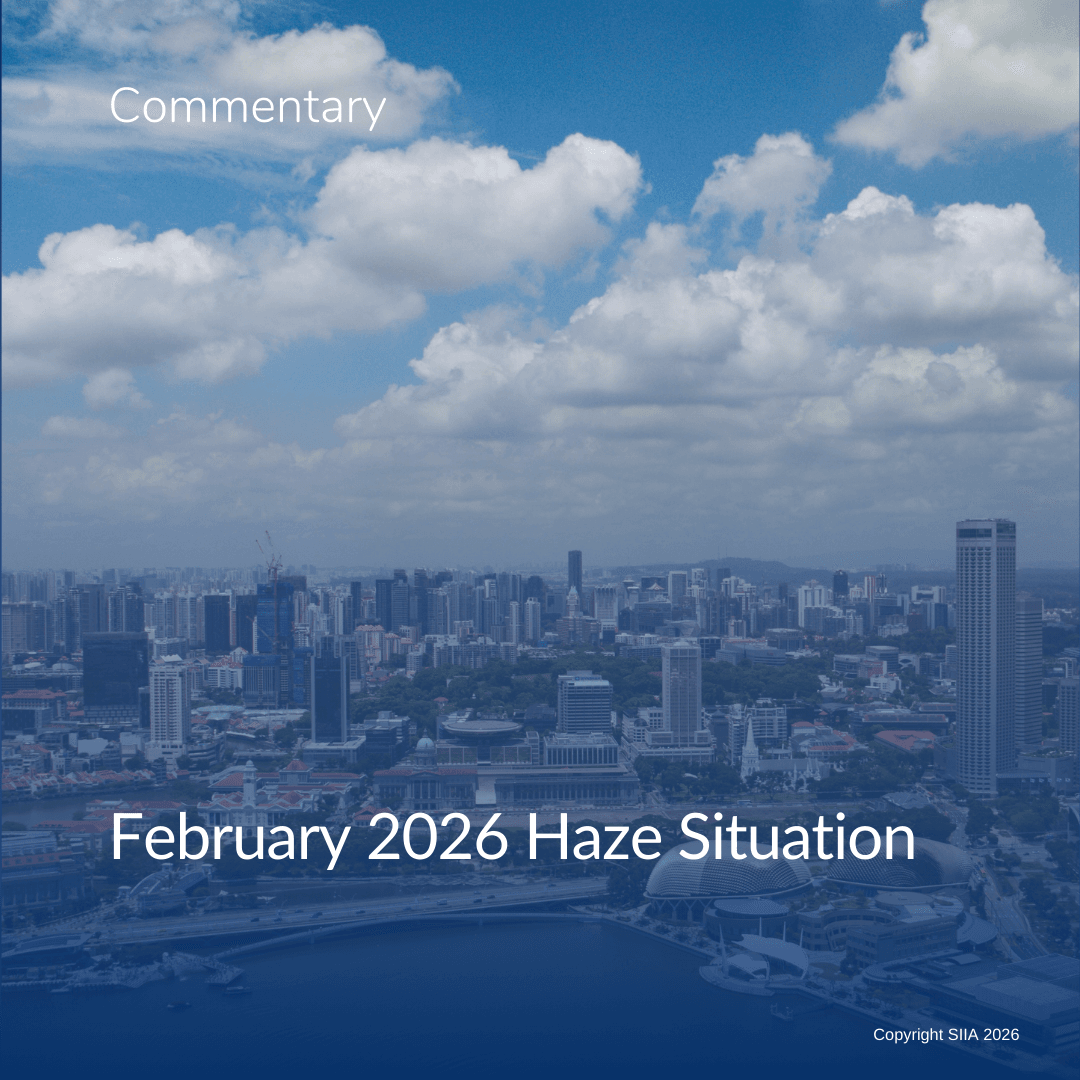
Singapore is still experiencing minor haze conditions this week, caused by new forest and land fires in Johor. Firefighters have managed to extinguish the peatland fire that was causing haze last week, but there is now another forest fire in Johor’s Kota Tinggi district and reports of a few smaller blazes. There is no immediate cause for alarm, as firefighting efforts and rain are expected to bring the Johor fires under control.
Southeast Asia experiences several dry seasons, affecting different portions of ASEAN across the year. The larger haze problem triggered by the February dry period is in the Mekong subregion. The ASEAN Specialised Meteorological Centre (ASMC) reports that moderate to dense haze is affecting parts of Cambodia, Myanmar, Thailand, and Laos, with over 600 hotspots detected by satellites last weekend. The reappearance of the haze emphasises that the ASEAN region needs to continue working improving land and fire management. The variability of weather means there may be never be a permanent solution, but the challenges must be managed.
The fires and haze in the Mekong are unlikely to affect Singapore directly. Historically, severe and prolonged haze has generally only hit Singapore around July to October, during the dry period just before the year-end monsoons, from fires closer to Singapore. Our annual Haze Outlook report will be released in mid-2026, providing a clearer indication of haze risk for the months ahead.