Chairman’s Note
Private and Confidential
For SIIA Corporate Members and Advisors
23 February 2025
As the year begins, a number of you have asked my outlook for our regional situation. At the start of last year, I was optimistic about prospects, and I remain so, despite global turmoil and major shifts by the USA in just year one of the Trump administration.
However, as 2026 begins, the prospect for key Asean economies is diminished, in my view. This moreover can be traced not only to global circumstances but to shifts within the countries.
In this note, I will survey key national issues that impact the economic and political outlook in neighbouring countries. With the need for brevity, I do so candidly and directly, even at the risk of oversimplification. I ask that my views be kept in confidence as the SIIA will hope to host policy makers from these countries in the coming months; while my opinions seek to be objective, there are sensitivities.
1. Indonesia: Following the street protests and unrest in August 2025, there have been a series of developments in the economic and financial spheres that have drawn attention. These include volatility on the exchange, resulting in two temporary trading halts and subsequent resignation of some senior officials. Policies in respect of land holdings by major plantation companies have also prompted discussion. Questions have arisen about policies impacting private ownership and broader outlook to foreign investors. While seeking to attract investors, the administration has introduced particular conditions that differ from past practices. Foreign investor interest appears to have somewhat moderated, with potential implications for growth and job creation. This presents challenges for the administration as it seeks to advance “down streaming” agenda, capture greater domestic value, and accelerate economic development.
Criticism has also been directed at the flagship school meals programme and the government’s response to recent floods, particularly in Aceh. Many in Jakarta feel that the Prabowo administration is consolidating power and decision-making authority within a relatively small circle, and that new policy directions are being introduced at pace, with implementation and implications still uncertain.
There are signs of unease among the political class, although there is currently no clear focal point for opposition, with both PDI-P and former President Jokowi maintaining relatively low profiles. Some observers note the possibility that public demonstrations could re-emerge, given the unresolved underlying concerns that triggered the protests in August last year.
Those within Prabowo’s circle appear aware of these developments. Their responses continue to evolve and will bear close observation. In some cases, they appear inclined to maintain their current policy direction while assessing outcomes.
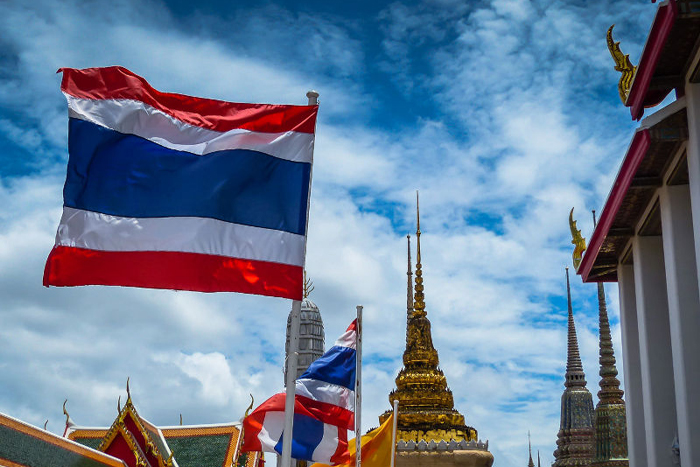
2. Thailand: Elections in Feb delivered hopes for political stability, with the establishment Bhumjaithai party (BJT) winning the most seats. The reformist People’s Party was second and while it won all 33 seats in Bangkok, this disappointed as compared to its win in the preceding elections of 2023. Markets have greeted the results positively. After three PMs in three years, political stability can help the Thai economy rebound from its current 1-2 per cent growth and new label as “the sick man of Asia”.
Medium term concerns bear attention. Beyond political in-fighting, there are more structural reasons for Thailand’s sluggish state, and reforms will be needed. These will not include questions about the Royalty and military as reformists have pledged. Expect reforms to address household debt levels and also to try to secure new markets for exports.
But a BJT-led administration may struggle with other economic reforms where it affects status quo, vested interests. Doubts remain about the political will to reforms that relate to the dominant roles of state own enterprises and the large conglomerates, and to address corruption. Watch also for efforts against scam centres. While often located in border areas or within neighbouring states, the flow of illicit monies has also come into Thailand and can implicate some establishment figures.
Key signposts will be the other parties invited to partner BJT and key technocrats currently heading Commerce, Finance and Foreign Affairs. It is not only whether the latter will remain in the new cabinet but the degree to which they will be allowed wider influence.
3. Malaysia: Results in 2025 exceeded expectations, especially in the last quarter, with an overall growth above 5 per cent. Traditional strengths, including semi-conductors and associated manufacturing were a major driver. The economic policy has been well managed in the midst of global turbulence. There is stability under Anwar compared to the preceding turmoil, and investor confidence has improved.
However, long standing schisms in the polity remain, and there is a continuing battle for the Malay ground. Anwar’s own party, the PKR, has limited appeal to these voters, and once dominant UMNO continues to struggle. PAS has instead entrenched a support among rural and also younger Malays. The self-declared Islamist party is poised to front the Opposition, ousting Bersatu and position itself for the long term – not withstanding elite and royal sentiments.
With the Malay ground divided, the DAP and East Malaysian states of Sarawak and Sabah enjoy heightened influence. But this has meant that there is little consensus about policies, let alone reforms. No general election is expected for the year, and Anwar will remain as leader. But jostling around him is growing, as is politicking within parties, and will heat up further with the 2027/ 28 elections coming up.
4. The Philippines: Economic growth is positive at more than four per cent for 2025 and predications of a moderate rise for 2026. Domestic consumption which is financed by remittances remain key driving factors, assisted by relatively low inflation and job growth.
There have however been delays in infrastructure and declines in FDI that can impact, and business confidence has softened. There were hits from the typhoons and flooding that will linger beyond the immediate disasters.
But problems also arise in the political arena, with real and consequential in-fighting between President Marcos and Vice-President Sara Duterte. While elections are not due until 2028, Marcos cannot run again and is trying to find ways to ensure Duterte does not come to the office. This has been personalized in the international arrest of former President Duterte, and impeachment complaints against VP Duterte.
Their conflict has rippled in many policy debates from finance to security and questions of Sino-American leanings. There are also schisms in the Senate that impact law-making. The leading family political and economic dynasties are also shifting.
While the economy continues at present, the political risk factors are already felt and will likely grow.
5. Vietnam: It has been more than one year since To Lam took leadership and announced ambitious reform plans. The party elections in Feb 2026 appear to have consolidated his power and we can expect that reforms will move ahead with gathering momentum.
Some uncertainty remains. Factions within the Party are hard to read, and corruption cases will likely continue. There are also instances when officials do not appear ready to move – for fear of being investigated for corruption or more simply because the cuts in ministries and number of officials are creating uncertainty about new lines of approval in the bureaucracy. There has also been a sharp shift in renewable energy policy that has disappointed investors. These may be problems of transition in undertaking major reform.
Headline growth remains strong, projected at 6-7 per cent, while the To Lam administration is pursuing still higher targets at 8 per cent and even double-digit growth, to reach upper middle-income status by 2030 and high-income status by 2045. Strategic thrusts identify digital and technological transformation and combating waste and resource mismanagement as priorities. Watch also for efforts to improve infrastructure, and in the financial sector and banks. In toto, hopes are for “doi moi 2.0” – a further and qualitative opening of the economy. Such ambition carries risk, especially in finance – which has experienced difficulties in the past. The financial management by government bears watching, and reforms are needed for the banking sector.
Challenges also exist given the country’s reliance on exports; there can be negative impacts from tariffs and market fragmentation. However, with the political consolidation and good management of Sino-American competition, Vietnam is well poised to move ahead.
Overall, Asean’s key economies largely continue to do well and outperform current global norms. Political frictions have however grown perceptibly over the last year and schisms in the national politics can impact rational and timely policymaking. These can hurt, especially given the current global turmoil, and foreign investor confidence is not to be taken for granted.
As always, I welcome your views and insights. Please feel free to reach out if you wish to discuss further.
Yours sincerely,

Simon Tay
Chairman
![[Premium] Chairman’s Note: Year Opener](https://siiaonline.org/wp-content/uploads/2026/05/ASEAN-Economy-e1779116151996.webp)