Businesses have a critical role to play in preventing future haze crises, but responsibility cannot rest with plantation and forestry companies alone.
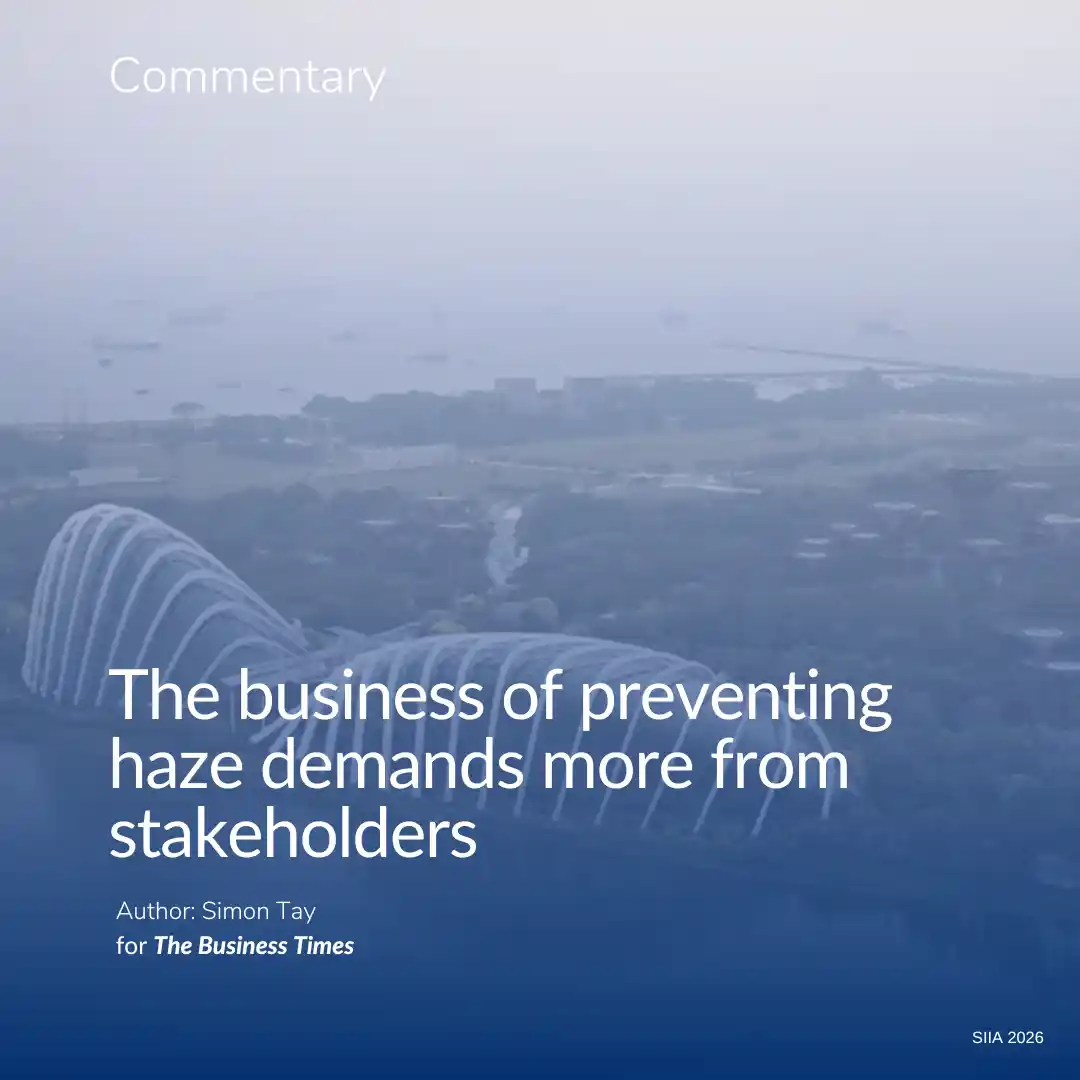
In a new commentary for The Business Times, SIIA Chairman Simon Tay argues that haze should be understood not only as an environmental and public health problem, but also as a business risk. For plantation and forestry companies, fires can damage assets, disrupt operations and expose them to regulatory investigations and reputational damage, while financial institutions, commodity traders and businesses in their supply chains also face risks.
He notes that responsibility does not end at concession boundaries. Effective fire management requires companies to work with neighbouring communities, concession holders and local authorities to monitor hotspots, maintain water levels in vulnerable peatlands and strengthen prevention. At the same time, enforcement must distinguish between companies that are genuinely investing in prevention and those neglecting known risks.
The commentary also examines the role of international market pressures, finance and company boards. Regulations such as the EU Deforestation Regulation, consumer scrutiny and financing decisions can all influence corporate behaviour, while Singapore’s Transboundary Haze Pollution Act provides additional avenues for investigation and accountability where credible grounds exist.
Looking beyond the present crisis, he stresses that cooperation, accountability and prevention must work together.
“Holding companies accountable and punishing them afterwards is necessary but cannot be sufficient. The authorities must enforce rules, companies need to manage risks across wider landscapes, and financial institutions and customers should require responsible conduct,” he writes.
“The business of preventing haze demands nothing less.”
Read the full commentary: The Business Times, 13 October 2026